I happen to be a gadget guy. Even if I don't need a gadget, and cannot realistically foresee using the thing, I will probably end up buying it anyway. Thankfully this, as a rule, applies only to gadgets that are meant for self defense. A few of the gadgets I own I have found useful and actually use on a somewhat regular basis. I thought that I would share with you those that I can recommend for purchasing and not be a waste of money (i.e., learn from my reckless spending).
First off, I think that a cell phone is invaluable fore everyday use and especially in emergency situations. I'll leave it up to as to which one you get. I carry mine in my left font pocket so that I can access it if my right hand is engaged with a weapon.
Next up is a flashlight. If you haven't thought about buying a new flashlight since Mag-lights came out, boy are you in for a big surprise. Now they are called "tactical flashlights" (when used for self defense and professional use of force) and Surefire is the industry standard, although there are a lot a good up and comers including Blackhawk!'s Night-Ops brand. Along with a flashlight I would highly recommend a "Tactical Impact Device" such as those pioneered by GG&G. I own two and have them on my Surefire e2e' s. Buy at least one set and spend some time thinking about and training how to use them. I wear mine at my mid-line clipped in my front left pocket so that I can have access to it if my right hand is engaged with a weapon.
A Kubotan is also a good idea and it is very practical, if for no other reason than to hold on to your keys. This is a self defense tool developed by Tak Kubota as a variation on Yawara stick, and the koppo stick, and from his experience of using a Cross pen in self defense. I started off with an inexpensive (about $5) black aluminum one (which should be more than effective and sufficient for most people), and then progressed to a way too expensive ($100) Rick Hinderer modular titanium version, which is cool as heck but probably only worth getting if your a gadget guy like me. There are a number of inexpensive variations on the Kubotan that I can recommend and they can almost all be purchased at kubotans.com. I can also recommend those made by Alpha Inovations.
Incidentally, the great Mas Ayoob became a fan of the kubotan after becoming one of Mr. Kubota's first certified trainers and has worked diligently to get them into common use among police departments and the general public. I wear mine at my mid-line in my waistband between my front pocket and my zipper flap.
I have also recently discovered the concept of the "defensive stylus". I decided to buy one after I showed up to the local courthouse to testify for a Grand Jury and they wouldn't let me in with my kubotan (apparently it is considered a "martial arts weapon" and is not allowed) but they completely overlooked my Parker pen which I could do just as much damage with.
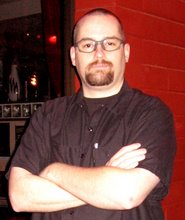
I have looked at many different variation including the Berry Jones version and those made by JSP Bladerigger , but I finally settled on one produced by Mil-Tac that has the added benefit of actually being a working pen. I haven't yet had the opportunity to use it yet in real life, but woe to the poor bastered who ends up on the receiving end of this fine instrument. I wear mine at my high-line clipped either in my shirt pocket or in my shirt placket, depending on the shirt I'm wearing. It can be seen poking out of my shirt pocket in the picture of me to the right.
Last but not least I would recommend a good folding knife of the tactical variety. This would be a knife that can be opened with one hand via a thumb hole, stud, disk, or a assisted opening or switchblade mechanism. Because the state I live in allows it, I carry an automatic knife (a.k.a. switchblade). For many years I carried a Benchmade Auto Stryker and it is a very fine knife and would recommend it to anyone. I have however recently purchased a Blackhawk! M.O.D. CQD Mk I. With the exception of not having a training drone available for it, I beleive this is nearly the most perfect self defese knife (see my "how to choose a self defense knife" post). As a rule I wear the knife I'm carrying at my mid-line clipped in my front right pocket, but if I'm dressing up I will wear it clipped in my waistband between my right front pocket and my zipper with the clip between the outside of my pants and the inside of my belt, as to look less conspicuous.
Please let me know if this was helpful to you or not.
Monday, April 2, 2007


Sunday, April 1, 2007
Choosing a martial art for self defense and professional use of force.
First off I'll say that if you are just looking for a martial art for something to do, or if you avoid conflict like the plague like I do (outside of work at least), just about anywhere is a good place to start. There are many good instructors and styles out there and you're just going to have to do the research and see what works for you. I would suggest that you avoid contracts though as they can be expensive if you don't stick with it.
With that being said, I do have an opinion on things to look for in a martial art in relation to self defense and professional use of force. I'm going to have to cover this in two parts as I think that, as no single martial art has all the answers, no single martial art can adequately cover both subjects. This is why, in both cases, I recommend first finding a base art that will give you a good technical and conceptual understanding of the type of physical conflict you think you will most likely encounter, and secondly finding an instructor that you are comfortable learning from and with. The second is definitely the hardest to do and may take you a number of years and schools to find. You are going to have to do this on your own because so much of it is about personal experience and chemistry.
For the purposes of self defense, being a man or a woman will influence the technical syllabus of what you will want to look for, as the self defense situations that men and women find themselves in can be very different. Men, as a rule, will want to find an art that trains about a 70/30 split between stand up fighting (70%) and ground fighting (30%), while women will want to look for just the opposite (unless you can find a school that covers them both equally).
Stand up arts are those which will include good foot work (the ability to move effectively, or "stick and move"), strong striking ability (effective hand, foot/shin, knee, elbow, and headbutt techniques), and has a training methodology that allows you to get in "flight time" (realistic sparring).
In my mind there are only a couple of arts that do any this adequately. In no particular order they are: western Boxing, Muy Thai, Savat, Filipino arts (Kali [especially Inosanto Kali], Eskrima, Arnis, etc.) and Jeet Kune Do. Of these, I like Jeet Kune Do the best as it tends to combine elements of each of the others along with the superior theory and training methodology that Bruce Lee developed. I also like Filipino arts (I practice Kali along with my JKD) as it teaches how to use weapons and, as the saying goes, " you 're not an ape- use a tool" (yes, I know that in light of recent scientific research and observation this is not entirely accurate, but you get the point). Kali is also a good place to start because it is (relatively) low impact and tends to develop some crazy ass coordination which leads to a superior understanding of distance and timing. This, as any instructor worth his salt will tell you, is the basis for winning a fight (and, incidentally, most activities in life). After a Kali class, my brain tends to hurt more than my body because my brain has to fire an all cylinders to keep up.
For women looking for a martial art to train self defense, I think that Brazilian Ju-jitsu is where it's at because most of the self defense issues for a woman will face center around rape. In Brazilian Ju-Jitsu the two strongest position you can fight from are what are called the "mount" position (being on top of a person while straddling their torso), and the "guard" position (being on the ground, on your back, with your legs wrapped around the other person). Although the guard position can feel like a very awkward place to learn to fight from, this is where a potential rapist will probably be wanting to get a woman. Being comfortable with knowing how to move and fight effectively from this position can be critical.
Judo can also teach many, but not all, of the same skills that BJJ teaches, so if you cannot find a BJJ school in your area, Judo can be a more commonly found alternative.
If none of the above mentioned arts are available in your area, again, you can start anywhere. The important thing is to get you thinking in the right direction. As Bruce Lee said, "there is no superior martial art, only superior martial artists". The man knew what he was talking about.
For the purposes of this post specifically, and this blog in general, when I refer to "Professional use of Force" I will be talking about those skills used by Law enforcement and Private Security to apprehend criminals (often called "Defensive Tactics" or simply "arresting techniques"), as compared to those skills used by soldiers (generally referred to as military combatives) used in the battlefield arena.
With this in mind, finding a good grappling system is key because applying force professionally often, if not usually, means restricting someones freedom of movement and putting them into handcuffs. I like Judo, Brazilian Ju-jitsu, and western wrestling for this purpose. If you are young, still in high school, and think that you may want to go into a law enforcement or security oriented job, take advantage of your high school wrestling program. Generally it's free and you don't have to be good, you just have to have heart and want to learn. It will be invaluable experience. Otherwise look up Judo (kodokan) and BJJ. Either will serve you well. If neither is available in your area, consider a form of kung fu (look for the key words "chin na" and "shuai-chiao"), traditional Japanese Ju-jitsu, Aikido (although it may take a while to be able to apply what you learn in class to situations at work, I have had success with the a modified "Iriminage" technique and a number of wrist locks, but generally only after I have had people otherwise subdued), and one of my heroes, Marc "Animal" MacYoung, swears by Silat and Kuntao, although I have no experience with it personally.
The reason that I say that you should be looking for a base art is that, as I said before, no single art has all the answers and you will want to cross train. Also, most of the arts that I mentioned are at least somewhat competitive in nature and can miss the point in regard to the realities of self defense and professional use of force. In any case it will be important to develop a scenario training regiment to figure out what works and would be useful in real life, and what wouldn't work, because sparring is not the end all be all in regard to testing technique. In my opinion, sparring is, aside from teaching lessons in an experiential manner, just another scenario. If sparring is the only hands on training methodology you use, then sparring is the only scenario you're training for. In my experience, very few fights go down that way. I've pulled off techniques "on the street" that a sparring session does not set you up for. Use your imagination when developing scenarios. They can be fun and very rewarding!
Please let me know if this was help full to you or not.
With that being said, I do have an opinion on things to look for in a martial art in relation to self defense and professional use of force. I'm going to have to cover this in two parts as I think that, as no single martial art has all the answers, no single martial art can adequately cover both subjects. This is why, in both cases, I recommend first finding a base art that will give you a good technical and conceptual understanding of the type of physical conflict you think you will most likely encounter, and secondly finding an instructor that you are comfortable learning from and with. The second is definitely the hardest to do and may take you a number of years and schools to find. You are going to have to do this on your own because so much of it is about personal experience and chemistry.
For the purposes of self defense, being a man or a woman will influence the technical syllabus of what you will want to look for, as the self defense situations that men and women find themselves in can be very different. Men, as a rule, will want to find an art that trains about a 70/30 split between stand up fighting (70%) and ground fighting (30%), while women will want to look for just the opposite (unless you can find a school that covers them both equally).
Stand up arts are those which will include good foot work (the ability to move effectively, or "stick and move"), strong striking ability (effective hand, foot/shin, knee, elbow, and headbutt techniques), and has a training methodology that allows you to get in "flight time" (realistic sparring).
In my mind there are only a couple of arts that do any this adequately. In no particular order they are: western Boxing, Muy Thai, Savat, Filipino arts (Kali [especially Inosanto Kali], Eskrima, Arnis, etc.) and Jeet Kune Do. Of these, I like Jeet Kune Do the best as it tends to combine elements of each of the others along with the superior theory and training methodology that Bruce Lee developed. I also like Filipino arts (I practice Kali along with my JKD) as it teaches how to use weapons and, as the saying goes, " you 're not an ape- use a tool" (yes, I know that in light of recent scientific research and observation this is not entirely accurate, but you get the point). Kali is also a good place to start because it is (relatively) low impact and tends to develop some crazy ass coordination which leads to a superior understanding of distance and timing. This, as any instructor worth his salt will tell you, is the basis for winning a fight (and, incidentally, most activities in life). After a Kali class, my brain tends to hurt more than my body because my brain has to fire an all cylinders to keep up.
For women looking for a martial art to train self defense, I think that Brazilian Ju-jitsu is where it's at because most of the self defense issues for a woman will face center around rape. In Brazilian Ju-Jitsu the two strongest position you can fight from are what are called the "mount" position (being on top of a person while straddling their torso), and the "guard" position (being on the ground, on your back, with your legs wrapped around the other person). Although the guard position can feel like a very awkward place to learn to fight from, this is where a potential rapist will probably be wanting to get a woman. Being comfortable with knowing how to move and fight effectively from this position can be critical.
Judo can also teach many, but not all, of the same skills that BJJ teaches, so if you cannot find a BJJ school in your area, Judo can be a more commonly found alternative.
If none of the above mentioned arts are available in your area, again, you can start anywhere. The important thing is to get you thinking in the right direction. As Bruce Lee said, "there is no superior martial art, only superior martial artists". The man knew what he was talking about.
For the purposes of this post specifically, and this blog in general, when I refer to "Professional use of Force" I will be talking about those skills used by Law enforcement and Private Security to apprehend criminals (often called "Defensive Tactics" or simply "arresting techniques"), as compared to those skills used by soldiers (generally referred to as military combatives) used in the battlefield arena.
With this in mind, finding a good grappling system is key because applying force professionally often, if not usually, means restricting someones freedom of movement and putting them into handcuffs. I like Judo, Brazilian Ju-jitsu, and western wrestling for this purpose. If you are young, still in high school, and think that you may want to go into a law enforcement or security oriented job, take advantage of your high school wrestling program. Generally it's free and you don't have to be good, you just have to have heart and want to learn. It will be invaluable experience. Otherwise look up Judo (kodokan) and BJJ. Either will serve you well. If neither is available in your area, consider a form of kung fu (look for the key words "chin na" and "shuai-chiao"), traditional Japanese Ju-jitsu, Aikido (although it may take a while to be able to apply what you learn in class to situations at work, I have had success with the a modified "Iriminage" technique and a number of wrist locks, but generally only after I have had people otherwise subdued), and one of my heroes, Marc "Animal" MacYoung, swears by Silat and Kuntao, although I have no experience with it personally.
The reason that I say that you should be looking for a base art is that, as I said before, no single art has all the answers and you will want to cross train. Also, most of the arts that I mentioned are at least somewhat competitive in nature and can miss the point in regard to the realities of self defense and professional use of force. In any case it will be important to develop a scenario training regiment to figure out what works and would be useful in real life, and what wouldn't work, because sparring is not the end all be all in regard to testing technique. In my opinion, sparring is, aside from teaching lessons in an experiential manner, just another scenario. If sparring is the only hands on training methodology you use, then sparring is the only scenario you're training for. In my experience, very few fights go down that way. I've pulled off techniques "on the street" that a sparring session does not set you up for. Use your imagination when developing scenarios. They can be fun and very rewarding!
Please let me know if this was help full to you or not.
My first blog!
Hello and welcome to my blogsite! I imagine that what I write may come across as a bit clumsy until I get the hang of this, however please bare with me through my growing pains (and poor spelling ability) as I'm sure that It will only get better.
I would also like to say here that it is very important to me that the reader not take what I say as fact, expert testimony, or the ramblings of a wanna-be know it all, but rather as an opportunity for me to organize my thoughts and experiences on the given subject matter to better understand the subject its self. I also hope that this blog may do the same for you.
I fully believe that you can only work with what you have and try to pick up more along the way. With this in mind, please understand that what I write about is only from my understanding of the subject as I am writing the post, and I may very well look at things differently after I have had some time to experience and learn more. If you visit this blog after not having been here for some time and there appears to be no new entries, take the time, if you have any interest, to scan the posts, as I may have re- written parts of it to reflect a new understanding of the subject. This blog, like me, is a work in progress.
If you disagree with anything in one of my post, or you think that I could have added something to it, or you just want to have a discussion on the subject, write me a comment and I will be more than happy to have dialogue with you.
I would also like to say here that it is very important to me that the reader not take what I say as fact, expert testimony, or the ramblings of a wanna-be know it all, but rather as an opportunity for me to organize my thoughts and experiences on the given subject matter to better understand the subject its self. I also hope that this blog may do the same for you.
I fully believe that you can only work with what you have and try to pick up more along the way. With this in mind, please understand that what I write about is only from my understanding of the subject as I am writing the post, and I may very well look at things differently after I have had some time to experience and learn more. If you visit this blog after not having been here for some time and there appears to be no new entries, take the time, if you have any interest, to scan the posts, as I may have re- written parts of it to reflect a new understanding of the subject. This blog, like me, is a work in progress.
If you disagree with anything in one of my post, or you think that I could have added something to it, or you just want to have a discussion on the subject, write me a comment and I will be more than happy to have dialogue with you.
Subscribe to:
Comments (Atom)